

Testosterone Replacement Therapy (TRT) in Worcester, MA
Low testosterone doesn’t announce itself loudly- it shows up quietly in the way your energy fades, your motivation slips, and your confidence feels less reliable than it used to. At Dee Luxe Medical, we provide medically supervised testosterone replacement therapy (TRT) and men's hormone optimization in Worcester, MA for men who know something is off and want a personalized, results-driven plan- not a rushed prescription.
This is testosterone optimization done with intention, precision, and respect for your long-term health.
What is Testosterone Replacement Therapy? (The Science Behind It)
Testosterone plays a central role in male physiology- impacting muscle mass, metabolism, mood, cognition, libido, and cardiovascular health. As levels decline due to age, stress, inflammation, or metabolic dysfunction, men often feel like they’re running on half-capacity.
Our approach to testosterone replacement therapy (TRT) begins with comprehensive labs, symptom analysis, and a detailed clinical evaluation. We don’t treat numbers alone- we assess how testosterone interacts with estradiol, SHBG, hematocrit, thyroid function, and metabolic markers to design a balanced protocol.
Treatment may include injectable testosterone, peptide support, and lifestyle optimization, all monitored and adjusted over time. The goal isn’t excess- it’s optimal, stable levels that your body can actually use.
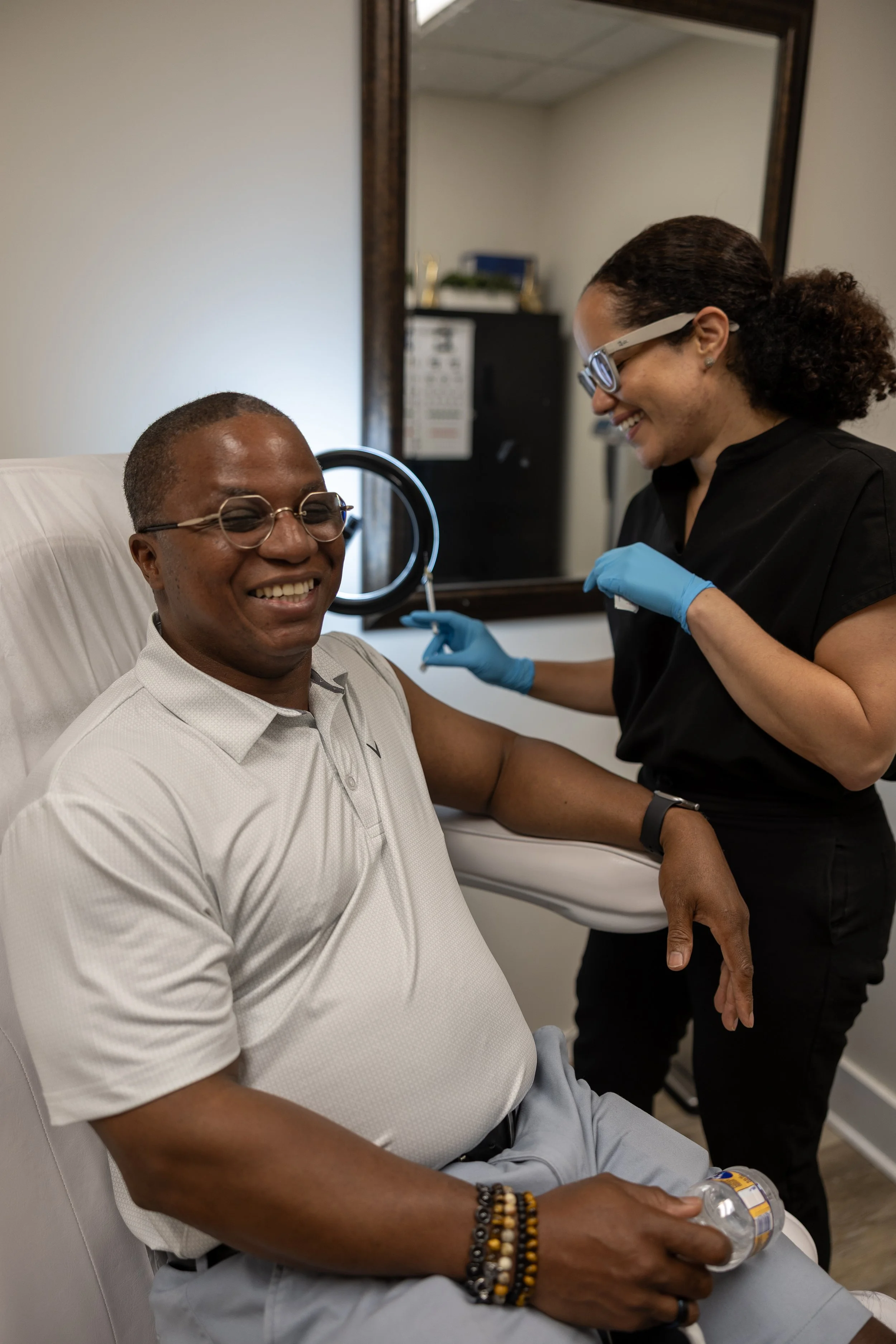
The Emotional + Physical Benefits Men notice
Men often come in saying:
“I’m tired all the time, even when I sleep.”
“My workouts don’t hit the same.”
“My drive- at work and at home- is gone.”
“I don’t feel sharp anymore.”
As testosterone levels stabilize, many men report:
Improved energy and stamina
Increased strength and lean muscle retention
Enhanced focus, motivation, and mood
Stronger libido and sexual confidence
Better recovery from workouts and stress
This isn’t about becoming aggressive or unnatural- it’s about feeling capable again.
What Men’s TRT targets
Low testosterone (hypogonadism)
Fatigue and low motivation
Loss of muscle mass and strength
Weight gain and poor workout recovery
Brain fog and decreased focus
Low sex drive/ libido or erectile issues
Mood changes and irritability
TRT Treatment & Ongoing Monitoring
Testosterone replacement therapy isn't one-size-fits-all. When TRT is clinically appropriate, your treatment plan is personalized based on your symptoms, lab results, health history, goals, and response to therapy.
We Monitor More Than Testosterone
Ongoing monitoring helps us evaluate your response, make thoughtful adjustments, and identify potential side effects. Follow-up may include:
Total and free testosterone
CBC and hematocrit
Estradiol and SHBG when appropriate
PSA and prostate health when indicated
Symptoms and overall response to treatment
We also pay attention to what matters to you—energy, libido, mood, strength, recovery, body composition, and overall well-being.
The goal isn't simply a higher testosterone number. It's helping you feel and function better while keeping your long-term health in focus.
Who Should Consider a Low Testosterone Evaluation?
A testosterone evaluation may be appropriate for men experiencing persistent symptoms such as decreased libido, fatigue, changes in strength or body composition, reduced motivation, or other symptoms potentially associated with low testosterone.
You may be looking for care if:
Your energy, recovery or drive has changed
You want to understand whether hormones may be contributing
You want medical evaluation and laboratory testing rather than an internet protocol
You value ongoing medical monitoring and individualized care
What to Expect at Your TRT Consultation
1. Consultation & Symptoms
Discuss energy, libido, strength, body composition, mood, sleep, performance and health history.
2. Comprehensive Lab Evaluation
Evaluate testosterone and other clinically relevant markers.
3. Personalized Treatment Plan
If TRT is appropriate, discuss treatment options, expectations, risks and monitoring.
4. Ongoing Optimization
Follow symptoms, labs and response over time rather than prescribing testosterone and sending the patient on his way.
FAQs
-
Some men notice improvements in energy and focus within weeks. Full benefits typically develop over 8–12 weeks.
-
Yes. Safety comes from individualized dosing, lab monitoring, and ongoing follow-up.
-
TRT supports muscle retention and strength, especially when paired with resistance training.
-
Low testosterone can contribute to ED. TRT may improve sexual function, especially when combined with targeted therapies.
-
Temporary effects may include acne, fluid retention, or sleep changes—often resolved with dose adjustments.
-
Labs are monitored routinely to ensure safety and effectiveness.
-
We combine medical expertise, advanced diagnostics, and a high-touch boutique experience—without rushed visits.
-
Low testosterone is diagnosed through a combination of symptoms and laboratory testing. Diagnosis typically requires at least two separate early-morning testosterone measurements showing consistently low levels. Additional labs may be used to evaluate free testosterone, SHBG, and other factors that can help identify the cause and guide an individualized treatment plan.
Built for performance. Backed by medicine.
Built for performance. Backed by medicine.
Ready to Perform at Your Best Again?
Low testosterone isn’t a failure- it’s a signal.
This isn’t guesswork. It’s a strategy. Ready for yours?
Let’s talk about your performance and vitality goals.